
To make DJMAX RESPECT mode work, special converter is necessary
To use DJMAX RESPECT mode, the latest firmware is necessary
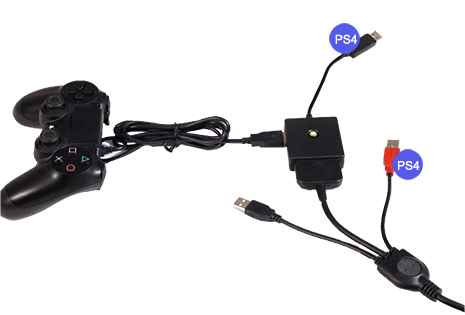
After you connect the controller according to the following steps, you can make DJMAX RESPECT mode work normally.
Converter doesn’t support PS4 PRO game body for the time being.
The blue pilot light of the converter should turn green, and keep shining after flashing about 30 seconds, then you can play game samurai moviesda portable
Press start+select+5, simultaneously about a second, PS2 IIDX mode and DJMAX RESPECT mode of the controller can be switched repeatedly
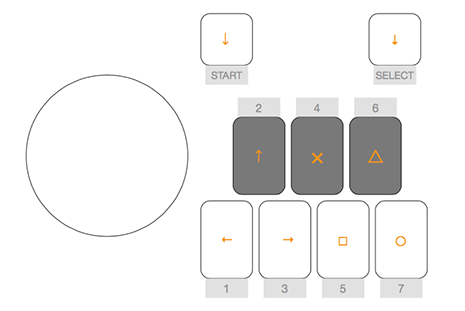
Key mapping is shown as following image
| Controller | PS4 key |
| Start | left stick ↓ |
| Select | right stick ↓ |
| 1 | ← |
| 2 | ↑ |
| 3 | → |
| 4 | × |
| 5 | □ |
| 6 | △ |
| 7 | ○ |
| Rotate turntable clockwise | left stick ↓ |
| Rotate turntable counterclockwise | left stick ↑ |
| Controller | PS4 key |
| Start+Select+4 | Option |
| Start+1 | L1 |
| Start+2 | R1 |
| Start+6 | R2 |
| Start+7 | L2 |
| Start+Select+5 | Switch for PS2 IIDX/DJMAX RESPECT game mode |
The details of the other questions are shown in “Common Question” in the bottom of this page
In the realm of cinema, few genres have captivated audiences as thoroughly as samurai movies. For decades, these films have transported viewers to feudal Japan, immersing them in a world of honor, loyalty, and epic battles. With the rise of portable entertainment, it's now easier than ever to access and enjoy these classic films on-the-go. In this article, we'll explore the fascinating world of samurai movies and provide a portable guide to some of the most iconic and influential films in the genre.
Samurai movies continue to captivate audiences worldwide, offering a unique blend of action, drama, and cultural insight. With the rise of portable entertainment, it's now easier than ever to access and enjoy these classic films on-the-go. Whether you're a seasoned cinephile or a newcomer to the world of samurai cinema, this portable guide provides a solid foundation for exploring the genre. So why not embark on a cinematic journey through feudal Japan, immersing yourself in the timeless world of samurai movies?
The 1950s and 1960s are often referred to as the "Golden Age" of samurai cinema. During this period, filmmakers like Akira Kurosawa, Toshirô Mifune, and Hiroshi Inagaki produced some of the most iconic and enduring samurai films of all time. Kurosawa's "Seven Samurai" (1954) and "Yojimbo" (1961) are widely regarded as two of the greatest samurai movies ever made, showcasing the genre's unique blend of action, drama, and social commentary.
The first samurai films emerged in Japan during the 1920s, a time when the country's film industry was still in its infancy. These early movies often focused on the heroic exploits of legendary samurai, drawing inspiration from Japanese history, literature, and folklore. As the genre evolved, it began to incorporate elements of Western cinema, leading to the development of distinct sub-genres like jidaigeki (period drama) and chanbara (samurai film).