Basics


Info Download

Advanced

v/v
V
V

Plot Download

Atomic Test And Set Of Disk Block Returned False For Equality (2025)

Introduction In the world of low-level systems programming and distributed databases, few error messages are as cryptic—and as critical—as "atomic test and set of disk block returned false for equality." If you have encountered this error while working with a clustered file system, a distributed lock manager, or a custom storage engine, you know the frustration it brings. The operation failed unexpectedly, leaving your application in an inconsistent state.

do expected = read_disk_block(block_id); new_value = expected + 1; while (!atomic_test_and_set(block_id, expected, new_value)); If nodes are failing to release locks before their leases expire, increase the lease duration. Ensure that your system has a reliable lock reclamation mechanism (e.g., a watchdog or a lock monitor). Fix 4: Ensure Disk Write Ordering and Flushing Reorder writes so that the TAS block is the last write in a critical section. Use fdatasync() or O_SYNC to ensure the TAS write is persisted before proceeding. This prevents scenarios where a crash leaves the block in an unexpected state after recovery. Related APIs and Commands | API/Command | Purpose | |-------------|---------| | sync_file_range(2) + fdatasync(2) | Control write ordering | | io_uring_ops with IORING_OP_COMPARE_AND_WRITE | Linux native TAS on block devices | | fcntl(F_OFD_SETLK) | POSIX file locking (not block-level) | | nvme compare and nvme write | NVMe’s compare-and-write primitives | | rados cas (Ceph) | Object-level atomic compare-and-swap | Real-World Case Study Symptom: A 4-node GlusterFS cluster began throwing “atomic test and set of disk block returned false for equality” errors after a power outage. Metadata operations hung, and thick provisioning failed. Introduction In the world of low-level systems programming

The error message explicitly tells you: false for equality means the atomic compare-and-swap (CAS) operation failed because the value on disk was not equal to the expected value. 1. Distributed Lock Managers (DLM) in Clustered File Systems Clustered file systems like OCFS2, GFS2, or VMFS use disk-based locks. When a node tries to acquire a lock on a block range, it performs a TAS. If another node holds the lock, the TAS returns false . The error message usually appears in kernel logs or cluster daemon logs when there is a lock conflict timeout or a stale lock detection issue. Ensure that your system has a reliable lock

Remember: atomic operations do not fail silently—they give you clues. Decode them, respect the state on disk, and your system will achieve the consistency it was designed for. Keywords: atomic test and set, disk block, returned false for equality, compare and swap, distributed lock manager, concurrency control, optimistic locking, split-brain, storage consistency, clustered file system debugging. This prevents scenarios where a crash leaves the

The power outage caused two nodes to believe they owned the same disk block region (split-brain). The DLM’s internal block version counter had reverted to 0 on one node after unclean shutdown.
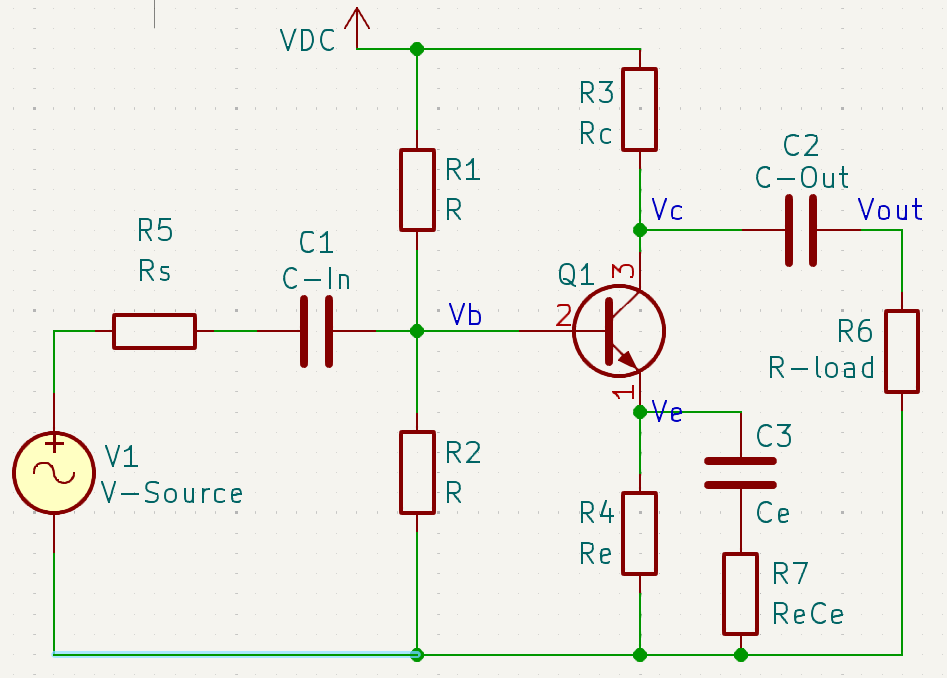
Disclaimer: This tool is provided for educational and illustrative purposes only. No guarantee is made regarding accuracy, suitability, or performance. Use at your own risk. - Copyright: ufelectronics.eu / Andreas Dyhrberg

×
Amplifier Schematic
×

There are different ways to calculate an amplifier, depending on what you want to achieve.

Maybe you want to achieve a certain gain, as far as possible (classic mode). Or you have a low Vcc to respect (modern mode). Or you work with analog audio amps (symmetry mode).

Depending on what you want to achieve and the way of calculating it. Some fields might become dependent on others, or the other way around.

Your above choise makes some input fields available for manipulation, while hiding others.


🎯 1. Target Gain (Av) — "Classic mode"

You care about how much your amplifier multiplies the input signal.

Set desired voltage gain and Rc voltage drop. Best for learning and simple amplifiers.

You say: “I want a gain of 10.”
The app adjusts resistors to try and match that.
You must give Av and Vrc (the voltage dropped across Rc).

Best for common emitter amplifiers.

✅ Default choice for most beginners and educational use.


⚡ 2. Target Emitter Voltage (Ve) — "Modern mode"

You care about setting a healthy DC bias point.

Prioritize stable biasing via Ve. Useful for low-voltage circuits or precision designs.

You say: “I want Ve = 0.5 V, to keep the transistor out of trouble.”
This makes sure your transistor stays in active mode.
Gain becomes whatever it turns out to be.

Ideal for common emitter amplifiers when the goal is to ensure proper biasing for low-voltage or precision circuits, and it’s also used in class AB amplifiers to prevent distortion

✅ Useful in low-voltage designs (e.g., 3.3V systems).


🧭 3. Target Collector Voltage (Vc) — "Symmetry mode"

You want to place the collector in the middle of the power rail.

Target Vc = Vcc/2 for maximum signal swing. Great for audio and analog signals.

You say: “Make Vc = Vcc/2” for maximum swing.
Useful for analog audio amps or symmetrical headroom.
Gain and Ve are outcomes.

Best for common collector amplifiers and class AB amplifiers.

✅ Best for signal integrity.

×

Features and Requirements

✅ Functional Features

  • Support for Four Amplifier Types
    • Common Emitter (CE)
    • Common Collector (CC)
    • Common Base (CB)
    • Class AB (AB)
  • Constraint Modes
    • Target Gain (Av) – “Classic mode”
    • Target Emitter Voltage (Ve) – “Modern mode”
    • Target Collector Voltage (Vc) – “Symmetry mode”
  • Input Parameters
    • Vcc, Ic, β (gain), Rs, Rl
    • Ve, Vc, Av, Vrc (depending on mode)
    • Divider current ratio
    • Transistor model selection
    • Resistor series (E12, E24, E96)
    • Target low cutoff frequency
    • Bypass capacitor selection (Yes/No)
  • Calculation Features
    • Resistor values (Rc, Re, R1, R2)
    • Input and output impedance (Zin, Zout)
    • Voltage gain, overall gain
    • Maximum input/output swing
    • Capacitor sizing: Cin, Cout, Cbypass
    • Support for standard resistor rounding and color band visualization
    • Model-aware parasitic capacitance (Cbe, Cbc) and effect on fc

✅ Educational Features

  • Visual Feedback
    • Schematic changes with amplifier type
    • Constraint mode helper and long explanation section
    • Graphs: gain vs frequency, swing diagram
  • User Interface Enhancements
    • Responsive layout
    • Constraint help tooltip
    • Collapsible “Longer Explanation” for constraint modes
    • Zoom controls
    • Dynamic timestamping for exports
  • Export and Print Features
    • CSV/XML export
    • Clipboard copy of results
    • Resistor and capacitor export
    • Print-friendly layout